Testing of mechanical properties of wires and cables
Release date:2019-10-23 Number of views:1562
1. Mechanical strength test
The ability of a cable to resist external forces without being destroyed is called mechanical strength.The mechanical strength requirements are mainly tensile strength and elongation.Tensile force: Under the action of evenly increasing tensile force, the sample gradually deform until the maximum load required for tensile breaking is called tensile force, which is expressed in Fm.Tensile strength: The ratio of the tensile strength to the vertical cross-sectional area (S) of the sample in the direction of force is called the tensile strength.Formula: δ=Fm/S elongation at break: The ratio of the length of the sample to the original length after being pulled until it is pulled off is called the elongation.Formula: γ=(L1–L0)/L0×100%, the original length of the L0 sample, and the length of the L1 sample when it breaks.
The mechanical strength tests often performed on cables are: the strength and elongation of copper wire and aluminum wire, and the strength and elongation of insulation and sheath materials before and after aging.
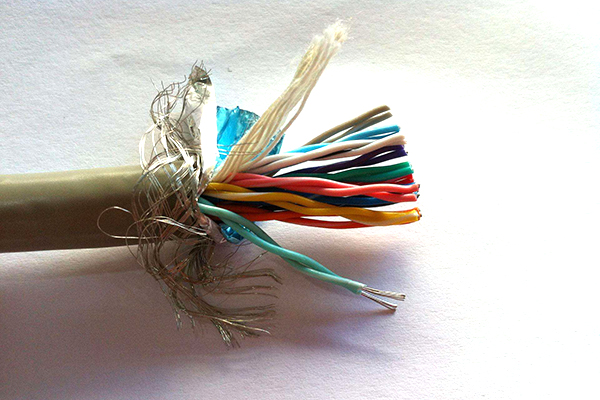
Zhengzhou Hongliang Cable Factory Control Cable
2. Bending performance test
Wires and cables are often subject to bending stress during production and use. Materials with poor bending resistance will crack and affect the quality and life of the product.The bending sample is divided into repeated bending and one-way bending tests.The quality of the bending resistance is generally measured by the number of bends the material can withstand. The more bends, the better the bending resistance of the material. The so-called number of bends is the total number of times the material sample is bent continuously, evenly, and repeatedly on the bending testing machine until it breaks.The test method of the bending test: Fix one end of the sample, and the free end is bent at 90° in the positive and negative directions along the cylinder of the specified radius until the specimen breaks.
3. Torsional performance test
The torsion test is used to determine the plastic deformation of the metal wire under torsion and to show whether the metal tissue is uniform and has surface defects or partial internal defects.Copper, aluminum, steel wire and other wire materials pass torsion tests to determine whether the wire meets the requirements of use based on the number of torsion times at the time of fracture.In the sampling test of steel core aluminum strand, the torsion test of steel wire must be done.Recommended products: Power cable
4. Winding performance test
The wire and cable product standards stipulate that metal wires should have good winding performance.The winding test method is to wind the specimen around a test rod of a specified diameter for a specified number of turns and observe the changes in its surface.There are two winding methods: repeated winding and one-time winding. In the test, one winding is used in accordance with the product standards.
- Previous article:A brief analysis of the best solution for cable water inlet
- Next article:The cause of the common-mode current on the cable