Product Introduction
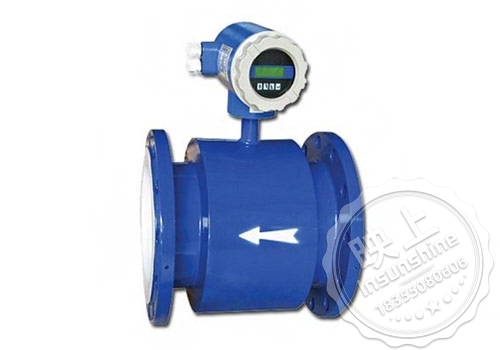
Working principle of fire water flowmeter:
Fire water flowmeter, also known as electromagnetic flowmeter, is an induction instrument that measures the volume flow rate of conductive medium inside a pipe based on Faraday's law of electromagnetic induction. It adopts embedded technology of single-chip microcomputer to achieve digital excitation, and adopts CAN fieldbus on the electromagnetic flowmeter, achieving a high level of technology in China. In addition to measuring the flow rate of general conductive liquids, it can also measure the volumetric flow rate of liquid-solid two-phase flow, high viscosity liquid flow, and salt, strong acid, and strong alkali liquids. Widely used in industries such as chemical, environmental protection, metallurgy, pharmaceuticals, papermaking, and water supply and drainage.
Product features:
There are no movable parts or flow blocking components inside the pipeline, and there is almost no additional pressure loss during measurement.
The measurement results are independent of physical parameters such as flow velocity distribution, fluid pressure, temperature, density, viscosity, etc.
On site, the range can be modified online according to the actual needs of the user.
High definition backlit LCD display, fully Chinese menu operation, easy to use, simple to operate, easy to learn and understand.
Using SMD devices and surface mount technology, the circuit has high reliability.
Adopting a 16 bit embedded microprocessor, it has fast computing speed and high accuracy, programmable low-frequency rectangular wave excitation, and improves the stability of flow measurement.
All digital processing, strong anti-interference ability, reliable measurement, high accuracy, flow measurement range can reach 150:1
Ultra low EM1 switching power supply, suitable for a wide range of power supply voltage changes, with good EMC resistance performance.
It has digital communication signal outputs such as RS485, RS232, Hart, and Modbus.
It has self checking and self judging functions, and provides sensor non-linear correction function without any reason.
Power outage protection, the calculation results of the flowmeter and the parameters set by the user will not disappear after power outage, and EEPROM can protect the set parameters and accumulated values
| Caliber mm | Flow range m³/h | Caliber mm | Flow range m³/h |
| DN10 | 0.16~2.5 | DN400 | 250~4000 |
| DN15 | 0.4~6 | DN500 | 400~6000 |
| DN20 | 0.6~12 | DN600 | 600~10000 |
| DN25 | 1.0~16 | DN700 | 800~12000 |
| DN32 | 1.6~25 | DN800 | 1000~16000 |
| DN40 | 2.5~40 | DN900 | 1200~20000 |
| DN50 | 4.0~60 | DN1000 | 1600~25000 |
| DN65 | 6.0~120 | DN1200 | 2500~30000 |
| DN80 | 10~160 | DN1400 | 3000~50000 |
| DN100 | 16~250 | DN1600 | 3000~60000 |
| DN125 | 25~400 | DN1800 | 5000~60000 |
| DN150 | 40~600 | DN2000 | 6000~100000 |
| DN200 | 60~1000 | DN2200 | 1367.78~136778.4 |
| DN250 | 100~1600 | DN2400 | 1627.78~162777.6 |
| DN300 | 160~2500 | DN2600 | 1910.38~191037.6 |
| DN350 | 200~3000 | DN2800 | 2306.56 ~ 236062.8 |
Product Selection
| model number | caliber |
|
||||||
| CH-LEL | 10~2600 | |||||||
|
|
|
nicknames | Installation form |
|
||||
| Y | all-in-one | |||||||
| F | split | |||||||
|
|
nicknames | Converter Model | ||||||
| ZA | orbicular | |||||||
| ZB | Square (split only) | |||||||
|
|
nicknames | Type of power supply | ||||||
| AC | 220V AC 50Hz(90~245V AC 50Hz) | |||||||
| DC | 24V DC (20~36V DC) | |||||||
| LD | Lithium battery powered (without signal output) | |||||||
|
|
nicknames |
|
|
|
||||
|
|
I |
|
|
|
||||
|
|
f |
|
|
|
||||
|
|
Rs |
|
|
|
||||
|
|
H |
|
|
|
||||
|
|
C |
|
|
|
||||
|
|
|
Medium temperature | ||||||
| ≤65℃ | ||||||||
| ≤120℃ | ||||||||
| ≤180℃(Split type only) | ||||||||
| nicknames | Lining Material | |||||||
| NE | neoprene(≤65℃) | |||||||
| PVC | (≤70℃) | |||||||
| PU | (≤80℃) | |||||||
| PTFE | (≤180℃) | |||||||
|
|
nicknames | Electrode Material | ||||||
| 316L | stainless steels | |||||||
| HC |
|
|||||||
| Ti |
|
|||||||
| Ta |
|
|||||||
| Pt |
|
|||||||
| Warm tips: flowmeter selection must, media, caliber (flow range), electrode material, lining material, installation requirements | ||||||||
| Electromagnetic flow meter | ||
| vantage | drawbacks | |
| 1 | There are no moving parts and no throttling parts in the measuring tube to impede the flow of fluid, which does not cause any additional pressure loss when the fluid passes through the meter. | It can only measure the liquid flow of conductive media, not the flow of non-conductive media |
| 2 | Electromagnetic flow meters can be used to measure the flow of other electrically conductive liquids after calibration with water only. | Cannot be used to measure gases, vapors, or liquids containing large quantities of gases. |
| 3 | Their range ratios can be up to 20:1, and some even up to 100:1 range ratios. | The medium in the pipe must be full, and cannot be measured out of a full pipe. |
| 4 | No mechanical inertia, sensitive response, can measure instantaneous pulsating flow, positive and negative direction of flow | Can only be measured above DN10 pipe, not applicable to small diameter |
| 5 | Measure the flow of corrosive media, spoiled media and suspended liquid-solid two-phase flow. | Cannot measure hydrofluoric acid media |
1, should be installed in the horizontal pipeline lower and vertically upward, avoid installation in the pipeline *** point and vertical downward;
2、It should be installed at the rising place on the pipeline;
3, in the open discharge pipeline installation, should be installed in the lower part of the pipeline;
4、If the pipeline drop is more than 5m, an exhaust valve should be installed downstream of the sensor;
5, should be installed downstream of the sensor control valves and shut-off valves, and should not be installed in the sensor upstream;
6, the sensor *** can not be installed in the pump inlet and outlet, should be installed in the pump outlet.