Product Introduction
I. Product Overview
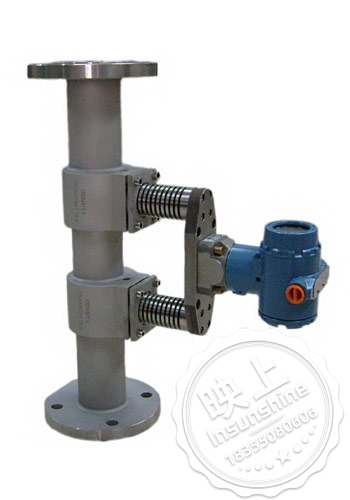
RL-3051 series on-line density meter for desulfurization slurry can be used to measure the density of various liquids or liquid mixtures on-line. In the petrochemical industry can be widely used in petroleum, oil refining, oil mixing, oil and water interface testing; in the food industry for grape juice, tomato juice, fruit syrup, vegetable oil and soft drinks processing and other production sites; dairy industry; paper industry; alkali solution testing; brewing alcohol; chemical urea, detergents, glycol, acid and alkali and polymer density testing. It can also be applied to mining slurry, brine, potassium alkali, desulphurization slurry, lubricating oil, biopharmaceutical and other industries.
Second, the main features
1, the use of integrated structure of the two-wire transmitter, no moving parts and simple maintenance.
2, four and a half digits of liquid crystal display.
3、Easy to install and use, inserted into the liquid can display readings.
4、Used in fluid or static liquid, suitable for pipeline and tank installation.
5, temperature and density of the two parameters can be alternately displayed, easy to industry standard density conversion.
6, continuous online measurement of liquid density without process interruption, can be directly used for production process control.
7、Contact with the liquid parts of all for several media stainless steel material manufacturing, safety; health.
Third, the technical indicators
1、4~20mA current output. Optional digital signal (HART protocol)
2、16~30VDC power supply. Recommended use of 24VDC.
3, density range: 0 ~ 2 g / cm3; 0 ~ 3 g / cm3
4, precision: 0.001 g / cubic centimeter
5, Resolution: 0.0005 g / cubic centimeter
6、Temperature range:0~100℃
7, temperature accuracy: 0.2 ℃
8、Ambient Temperature:-10~60℃
9、Humidity range:0~90%
Installation Precautions
1、Online density meter sensor part of the distance of at least 200mm, the diameter of 50mm, the field can not be smaller than these dimensions of the installation, such as the choice of bending type density meter, please measure the flange can be extended into the pipe and the length of the size.
2, the site liquid must be kept below the two measurement sensors, flange to **** the distance from the sensor can be selected.
3, pipeline installation needs to let the liquid from the bottom of the sensor into the liquid, or from the top of the sensor into the liquid, not from the center into the liquid. Pipeline installation through the liquid, the pipeline valve or elbow part of at least 30CM liquid buffer distance.
4, equipped with a power supply of 24VDC output 4-20mA signal such as the need to connect the secondary meter, need to connect 24V “+”
5, the site environment if the external corrosive liquid, please take protective measures. If there is a risk of lightning strike, please do a good job around the grounding device.
6, such as the need to disassemble to do cleaning, disassembly, please ensure that the sensor diaphragm is not subject to collision and other damage.
7、Do not use it in the case of higher than 5Mpa.
8, if you need to adjust the range need to use a handheld device, technical problems, please contact the manufacturer.
V. Ordering Guide
1、Density meter diaphragm is the weakest part, please do not let the sharp objects impact to the diaphragm caused by the destruction.
2、Online density meter can theoretically be measured according to the concentration of different media, please use the method according to the site conditions to convert the concentration of their own results.
3、Please contact the manufacturer when selecting the type, and provide on-site installation, and indicate when signing the contract.
4、If you need calibration, or adjustment, please contact the manufacturer.
| Code | Product name | |||||||
| CH3051 | Side mounted online density meter | |||||||
|
|
Code | Diaphragm material | ||||||
| A | 316L stainless steel | |||||||
| C | Hastelloy alloy | |||||||
| Z | Special material (selected according to the medium) | |||||||
|
|
Code | Medium temperature (unit: ℃) | ||||||
| N | Normal temperature | |||||||
| M | 0-80 | |||||||
| H | 0-120 | |||||||
| S | Special requirements | |||||||
|
|
Code | Density range (unit: g/cm3) | ||||||
| X | 0-1 | |||||||
| B | 0-1.5 | |||||||
| D | 0-2 | |||||||
| Q | 0-3 | |||||||
|
|
Code | Accuracy class | ||||||
| 1 | 0.50% | |||||||
| 2 | 0.1%(Special editing required) | |||||||
|
|
Code |
Installation method (D top installation or C side rotation) | ||||||
| F | Flange installation (DN80 flange) | |||||||
| Z | Special installation | |||||||
|
|
Code | Output signal | ||||||
| A | 4-20mA | |||||||
| D | RS232 | |||||||
|
|
Code | Pole length | ||||||
| N | 750mm(Diaphragm distance 500mm) | |||||||
| S | Customer requirements | |||||||
(1). The minimum spacing between the sensors of the online density meter is 200mm, and the diameter is 50mm. The installation on site cannot be smaller than these dimensions. If a curved density meter is (s)elected, please measure the flange and length dimensions that can be inserted into the pipe.
(2). The on-site liquid must be kept at least two measuring sensors, and the distance from the flange to * * * sensors is optional.
(3). During pipeline installation, it is necessary to allow liquid to enter from below the sensor at the bottom or from above the sensor at the top, and not from the middle. When installing pipelines for liquid flow, at least 30CM of liquid buffer distance should be left at the valve or elbow part of the pipeline.
(4). Equipped with a power supply of 24VDC to output 4-20mA signal. If a secondary meter is required, it should be connected to 24V "+"
(5). If there are corrosive liquids outside the site environment, please take protective measures. If there is a risk of lightning strikes, please install grounding devices in the surrounding area.
(6). When disassembling for cleaning, please ensure that the sensor diaphragm is not damaged by collision or other factors.
(7). Do not use it above 5Mpa.
(8). If adjusting the range requires the use of a handheld device, please contact the manufacturer for technical issues
(1). The density meter diaphragm is the weakest part. Please do not let sharp objects impact the diaphragm and cause damage.
(2). In theory, online density meters can measure concentrations based on different media. Please use the method to convert the concentration results according to the on-site situation.
(3). Please contact the manufacturer when selecting and provide on-site installation information, which should be noted when signing the contract.
(4). If calibration or adjustment is required, please contact the manufacturer.