Products
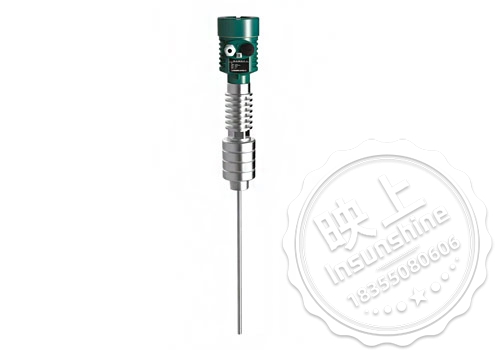
Guided wave radar level meter is suitable for a variety of process conditions of complex containers, tanks, silos, etc., and is not affected by changes in the physical properties of the measured medium, external measurement, two-wire technology, suitable for explosion-proof occasions, non-contact and continuous measurement of the pulse-type level meter large measuring distance of 35m.
Guided wave radar level meter measurement principle:
Guided wave radar is a measuring instrument based on the principle of time travel, radar waves run at the speed of light, the running time can be converted into level signals through electronic components. The probe sends out high-frequency pulse and spreads along the cable, when the pulse meets the material surface, it is reflected back and received by the receiver inside the instrument, and the distance signal is converted into the level signal.
Guided wave radar level meter technical parameters
Detailed technical parameters
Measuring range 0-45 meters
Process temperature -40 -200 ℃ (high temperature type can reach 400 ℃)
Process pressure -1.0--4.0Mpa
Working frequency 8.4GHz
Accuracy <0.1%
Repeatability ±3mm
Current signal 4~20mA/HART communication protocol
Communication interface HART communication protocol
Power supply 24V DC (+/-10%)/Ripple voltage: 1Vpp
Power consumption ≥0.3s (depending on the circumstances)
Explosion-proof certification ExiaIICT6
Enclosure protection class IP68
Two-wire wiring Power supply and signal output share a common two-core wire.
Cable entry Two M20 x 1.5 (cable diameter 5 ... 9 mm)
Features and advantages of guided wave radar level meter
No blind zone, high precision, sensitive measurement, fast refresh speed.
Two-wire technology, it is an excellent alternative to differential pressure, magnetostrictive, RF conductive, magnetic flap and other level instruments.
Not affected by pressure, temperature, density, foam, dust, inert gas, smoke, steam and other environmental effects.
Easy to install, solid and durable, maintenance-free
Suitable for high temperature working conditions, up to 200℃ process temperature, when using high temperature extension antenna up to 350℃.
HART or POFIBUS-PA communication protocols and fieldbus protocols for easy calibration.
Easy on-site calibration operation through LCD display and digital programming, or on-site configuration setting and programming through PF software.