1. Product model:
GS-ZBR (ZXW, ZKW, ZKWZ, ZBW, ZBR) corresponds to foreign models QTVR series
2. Temperature level: medium temperature (Z) series
Nominal power: 30W/m, 35W/m, 45W/m, 50W/m, 60W/m
3. Structure type: basic type (J), basic anticorrosive type (J2), shielded explosion-proof type (P), explosion-proof enhanced type (PQ), explosion-proof anticorrosive type (PFZR)
4. Voltage level: 110V, 220V, 380V, 600V
5. Cable structure:
1), Copper core wire:7×0.5、7×0.42、19×0.41
2), conductive plastic layer: ordinary PTC, flame retardant PTC, fluorine-containing PTC
3), insulating layer: improved polyolefins, flame-retardant polyolefins, fluorine-containing polyolefins, perfluorinated materials
4), shielding layer: tinned soft round copper wire, covering density 80%
5), sheath layer: improved polyolefins, flame-retardant polyolefins, fluorine-containing polyolefins, perfluorinated materials, silicone rubber, low smoke and halogen-free
6. Technical indicators:
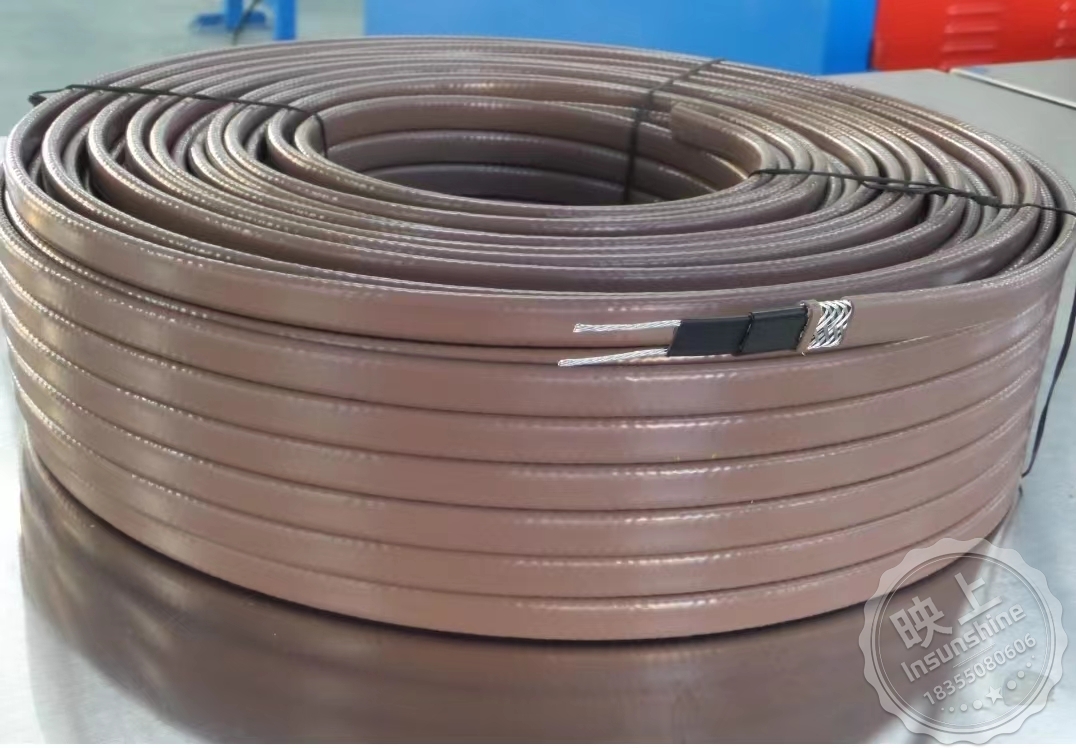
1), Standard color: brown
2), temperature range: high operating temperature 105±5℃
High exposure temperature 135℃
High withstand temperature: modified polyolefin 105℃, flame-retardant polyolefin 105℃, fluorine-containing polyolefin 180℃, perfluorinated material 205℃
3), construction temperature: low -40℃/-30℃
4) Thermal stability: After circulating back and forth 300 times from 10℃ to 135℃, the heat generation of the cable is maintained at more than 90%.
5), Bending radius: 30.4mm at -20℃, 40.6mm at -30℃
6) Insulation resistance: the cable length is 100m, at a constant temperature of 75℃; the test insulation resistance is a small value of 20MW, with shielding or explosion-proof protection type, at room temperature of 20℃, use 2,500 VDC to shake the shielding layer and the conductive core for 1 minute, the insulation resistance is a small value of 1200MW
7. Product advantages:
1) The temperature of the heat tracing pipeline is uniform, it will not overheat, and it is safe and reliable.;
2), save power;
3), during intermittent operation, heating up and starting quickly;
4), Low installation and operation costs;
5), easy installation and maintenance;
6), easy to automate management;
7), no environmental pollution